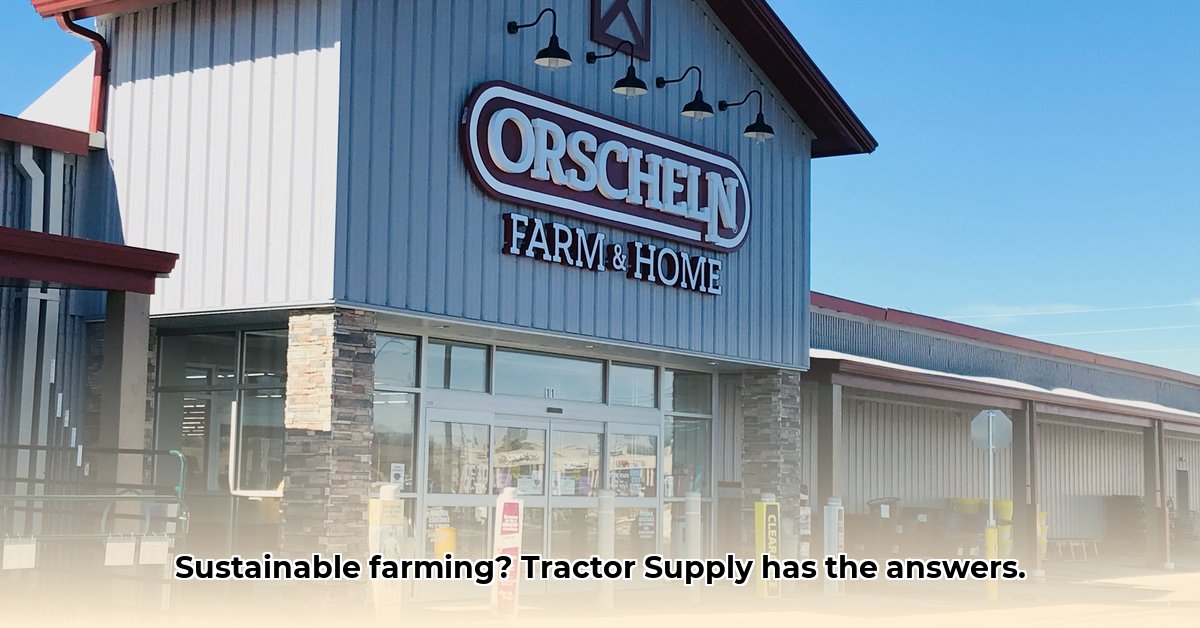
Tractor Supply (TSC) in Cape Girardeau, Missouri, plays a significant, albeit indirect, role in supporting sustainable agricultural practices. For more information on TSC's pet-friendly policies, visit this page. While not explicitly marketed as a sustainability champion, TSC offers numerous products applicable to eco-friendly farming. This article explores TSC's current contribution and proposes actionable steps to enhance its support for sustainable agriculture in the Cape Girardeau area.
TSC Products and Sustainable Practices
TSC stocks various items directly relevant to sustainable agriculture. Fencing materials are crucial for rotational grazing, a key technique in sustainable livestock management. Water troughs ensure efficient water usage and improve animal welfare. Seed varieties, while not always explicitly labeled "organic," support diverse planting, promoting healthy soil and pest management. Livestock feed options allow farmers to select sustainably sourced feed, minimizing reliance on processed options. Tools for building raised garden beds promote efficient land use and reduce soil compaction. These basics provide the foundation for sustainable farming practices, both large and small-scale.
Assessing TSC's Current Contribution
While TSC provides essential supplies, its contribution to sustainability is currently indirect. The store doesn't explicitly market itself as a champion of sustainable agriculture. Their impact depends heavily on the conscious choices of consumers and farmers. The question is: are local farmers actively choosing TSC products to specifically support sustainable practices? Their current success as a facilitator of sustainable agriculture is inherently linked to this conscious application of readily available resources.
Opportunities for Improvement: Actionable Steps
Several strategic steps could significantly improve TSC's role in promoting sustainable agriculture in Cape Girardeau:
Customer Needs Assessment: Conducting a customer survey focused on sustainability preferences is crucial. Understanding local farmers' priorities regarding sustainable practices and product needs will inform future product offerings and inventory decisions. This data-driven approach ensures TSC caters to the community's specific requirements.
Strategic Partnerships: Collaborating with local sustainable farms creates a mutually beneficial relationship. TSC gains credibility by showcasing successful sustainable farmers who utilize their products, while the farms gain increased visibility and access to a larger market. Joint marketing campaigns and featuring locally sourced, sustainable products within TSC's aisles could be highly effective.
Enhanced Product Information: Clearer labeling for environmentally friendly products is essential. Highlighting products suitable for organic farming or those made with recycled materials would allow for easier informed consumer choices. Detailed information about the environmental benefits of various products—in-store displays, online resources, or even workshops—would further empower sustainable choices.
Investing in Educational Initiatives: TSC could support local sustainable farming initiatives, such as sponsoring workshops, educational programs, or events. This would raise awareness and position TSC as a community leader committed to promoting sustainable practices. This strategic approach goes beyond mere product sales and builds a stronger connection with the local community.
The Role of Consumers and Local Farmers
Conscious consumer choices are critical. Selecting sustainable products signals market demand, encouraging TSC to expand its offerings in that direction. Local farmers play a vital role; their adoption of sustainable practices directly influences TSC's response to that demand. It is a collective responsibility across all stakeholders.
Conclusion: A Path Toward Sustainable Agriculture
Tractor Supply, local farmers, and environmentally conscious consumers share a common interest in building a sustainable agricultural system. By embracing the opportunities outlined above, TSC can significantly enhance its positive impact on sustainable farming practices in Cape Girardeau. This is a collaborative journey requiring continuous evaluation and adaptation for long-term success. The future of sustainable agriculture in Cape Girardeau depends partly on the evolving partnership between these key stakeholders. The time for action is now.